The original recipe of the first Grecian cheesecake may be lost forever, but the loss is somewhat made up for, given the remarkable variety of the very many forms it has evolved into. After all, it won’t be erroneous to say that there are as many kinds of cheesecakes in the world as there are countries.
Be it the Greeks – who are credited with inventing it – or the Romans – who are generally speculated to have introduced it to Western Europe – blessed be the one who dreamed up the cheesecake! One may as well imagine it to have ensued from the effluvious recess of a Samian kitchen finding its way to the resplendent banquets (or 'symposia') reclining majestically on fine terracotta plates. With the Roman conquest of Greece and the subsequent expansion of the Roman Empire, the cheesecake traveled far and wide.
The original recipe of the first Grecian cheesecake may be lost forever, but the loss is somewhat made up for, given the remarkable variety of the very many forms it has evolved into. After all, it won't be erroneous to say that there are as many kinds of cheesecakes in the world as there are countries.
Each country has its own cheesecake and no two countries are likely to agree on any single 'authentic' recipe! While the French use Neufchatel cheese for their cheesecakes, New Yorkers swear by cream cheese. The delectable Chhena Poda (burnt cheese) of Odisha in India, on the other hand, uses cottage cheese (a close kin of the ricotta) as the primary ingredient. Although the appearance of the Chhena Poda seems to incline more towards the flan than the cheesecake, this resemblance is decidedly superfluous. If you are keen on sampling the authentic Chhena Poda of Puri (the famous temple town in Odisha) – the favorite of Lord Jagannath – you will find some useful information here.
And, just in case you happen to be interested in the the history of cheesecake, here's a splendid book.
I am not much of a baker (although I enjoy baking). When it comes to cheesecakes, I am a beginner. And, quite a serious one at that!
The photographs in this post are from a test run I'd had a week ago and I wasn't too displeased with the way my cheesecakes turned out. 'Only a tad too thin!' noted the observant husband (with a chuckle) 
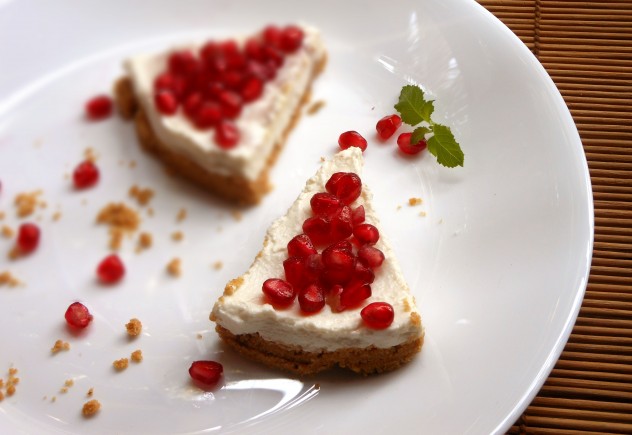
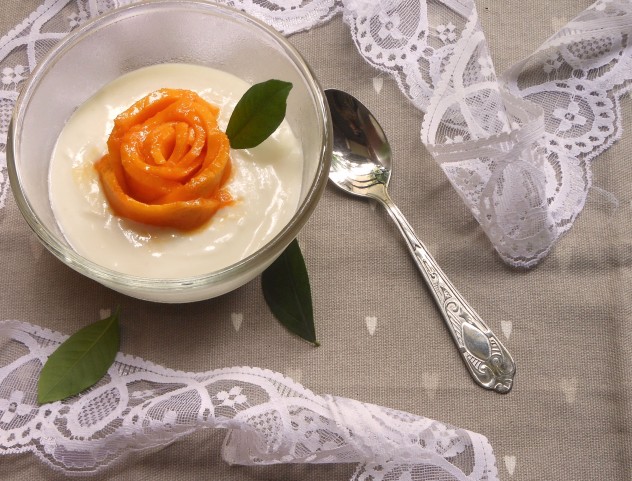
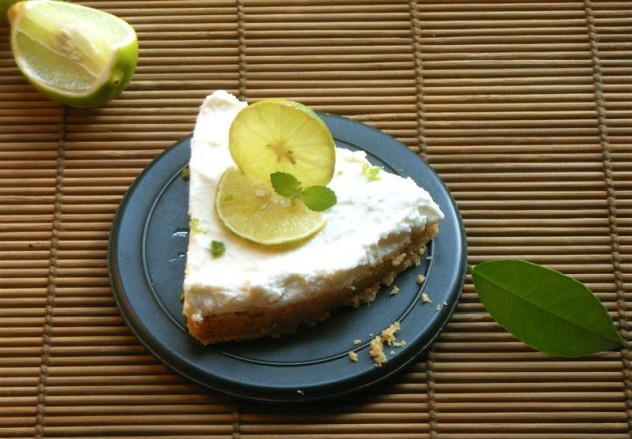
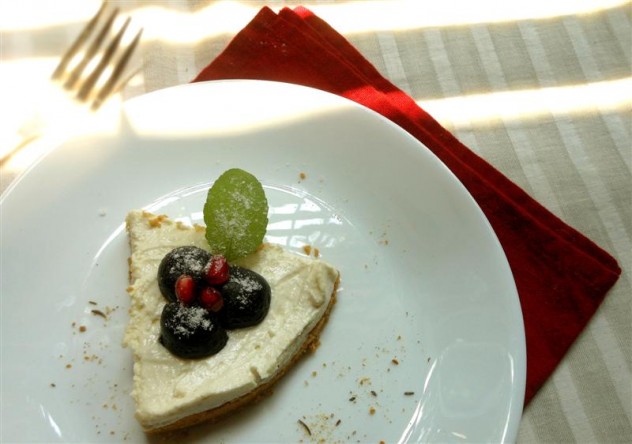
I used four different toppings for my cheesecake slices – lemon-n-honey, black grape, pomegranate and mango.
I loved the one with the pomegranate topping 
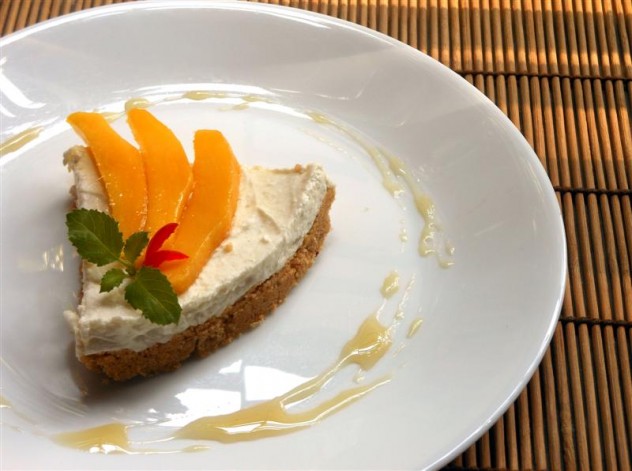
So much for the test run!
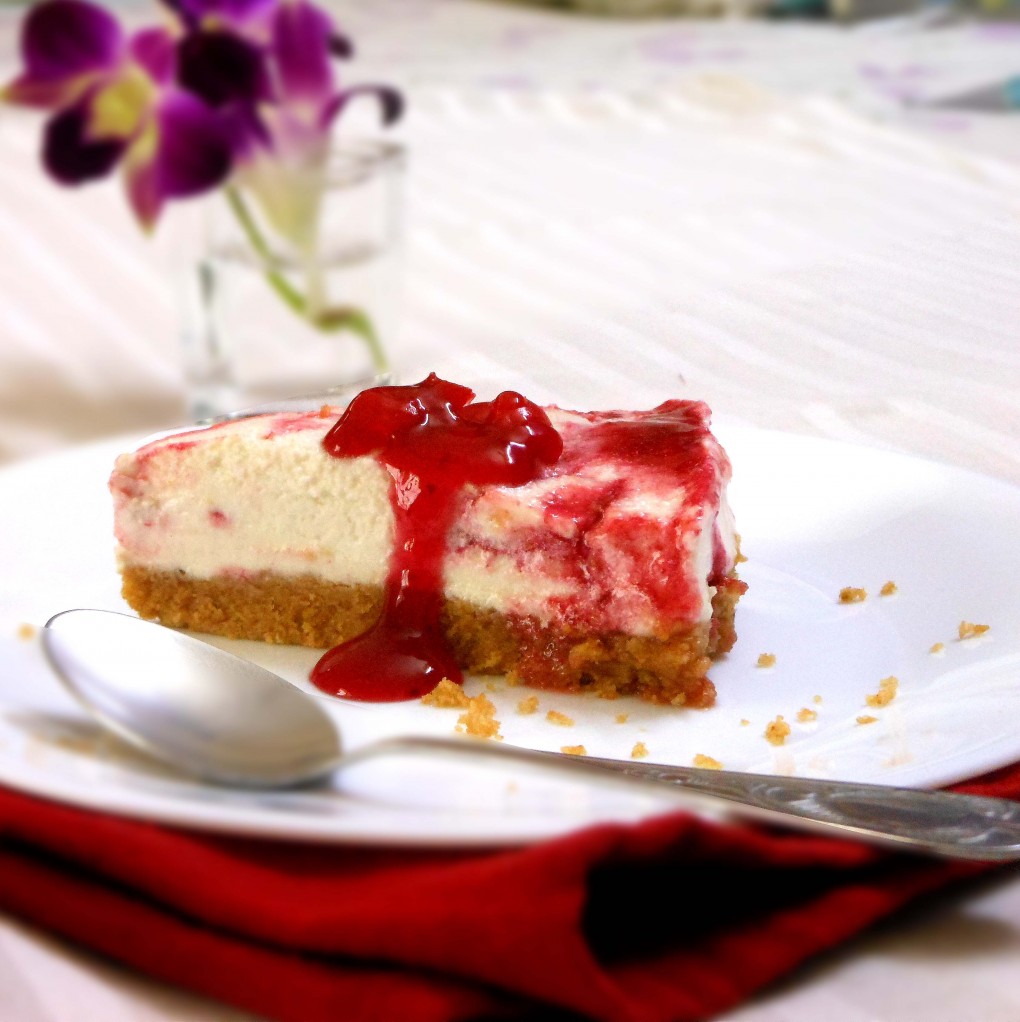
Now here's a full pound of Strawberry Cheesecake – after all the elaborate trial. I LOVE it!
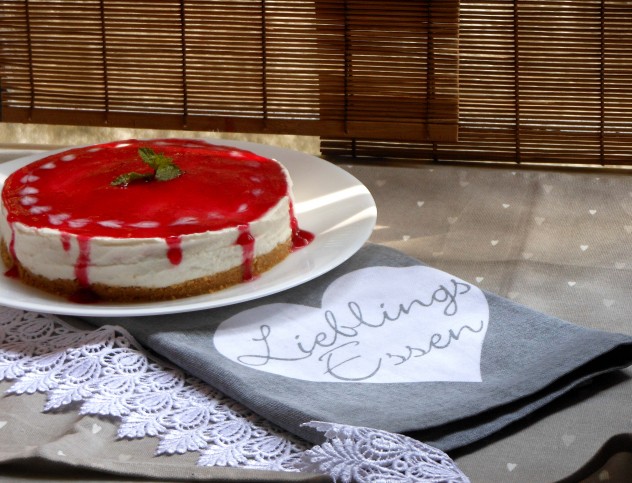
We polished it off in no time. Understandably. 
This is a no-bake recipe.
For my cheesecake, I used the following ingredients:
1. 500 gm homemade cream cheese (you'll find a recipe here)
2. 50 ml condensed milk
3. 50 ml double cream
4. 15-20 digestive/ graham cracker biscuits (crushed)
5. Confectioner's sugar (to taste)
6. 75 gm unsalted butter (melted)
7. A teaspoon of freshly ground cinnamon (optional)
8. Strawberry preserve
Crush the digestive biscuits (coarsely) in a grinder; a quick pulse will do the job. Mix well with the ground cinnamon, if using. Blend in the butter evenly. The resulting mixture should resemble wet sand in consistency and texture. With the back of a spoon, press it into the bottom of a springform pan. Refrigerate for about 15 minutes or until firm.
In a roomy and deep bowl, beat together (with an electric beater) the cream cheese, the double cream, and the condensed milk till the batter turns thick and creamy. Add the confectioner's sugar and continue to beat until soft peaks start forming. Pour carefully over the chilled crust and refrigerate overnight. Unmold (you'll find useful tips on how to perfectly place your cheesecake in this video) and decorate with strawberry preserve/ fresh strawberries (or any other topping of your choice) before serving.

Bon Appétit!







This is exotic! Thanks for the recipe. Would definitely try it 🙂
You are welcome 🙂